Author: admin

Peter Burdin

After leaving the BBC, where he was Africa Bureau Chief, Peter has devoted his career to helping young journalists find their feet as a lecturer in International Journalism and Africa Ambassador, connecting companies, investors and universities to Africa.

Stuart Baird

Award-winning PR consultant and trainer Stuart Baird has advised ministers, medics, Hollywood actors and diplomats in a career spanning spells at No10, Whitehall, the NHS, and a number of large corporates.

Presentations not connecting? Try being more human

Waiting for my slot to present a session, all I could hear were gales of laughter, followed by tumultuous applause for the previous speaker.

Did I think ‘how wonderful that the audience is having a wonderful experience’. Did I hell. More like ‘how on earth am I going to follow that?’

Imposter syndrome certainly picks its moments. This exact moment being when I was about to present on projecting confidence. If I could get blown off course by someone else’s mojo (did I mention she was also wearing a kick-ass outfit?) did I really have any right to be there?

A cup of tea and a biscuit later, I realised that my wobble was the very thing that gave me the right. That feeling of not being good enough often holds us back from even trying, particularly when we’re asked to do something as exposing as pitching and presenting. And I needed to be willing to share that vulnerability with the group. Gulp.

So I ditched my gung-ho opening and instead admitted how I’d felt back there in the waiting room.

Being willing to make myself vulnerable changed the energy in the space. It created a connection by giving everyone permission not to be perfect. It enabled a conversation about how and why people hate standing up and presenting and started us on the path to fixing it. And it got me thinking:

Are we so focused on being impressive that we forget to be human?

I often see this when coaching senior women who feel the need to project a formal, ‘professional’ image when presenting. The result can be speeches that are packed with long words but reveal little of the person beneath.

It’s understandable. Having fought their way to the top in a male-dominated field, they’ve trained themselves to eliminate any sign of weakness. But being open isn’t the same as putting yourself down or under-playing your success. Showing your authentic self is actually one of the most confident things you can do.  

Putting yourself into your presentation doesn’t have to involve a full-on confessional overshare. In fact, if you’ve had an extremely full-on life it probably shouldn’t!  But simply adding a little warmth to your expertise makes you a more compelling speaker. If this is new to you, here are some ideas to try out:

  • Open with a simple personal story. If you’re talking about careers opportunities in your industry, why not tell people about how you came to accountancy/beekeeping/professional clowning?
  • Challenge yourself to ruthlessly eliminate corporate language or public sector buzz words and speak like you would with friends down the pub. Note: after one pint, not ten.
  • Link a non-work aspect of yourself – perhaps your family or a hobby – to a work-related issue. Perhaps you learned how to stay calm in a crisis when your 80-year-old mother lost her passport in an airport? Maybe organising the league matches for your hockey team has taught you everything you need to know about scheduling?

Get comfortable talking about yourself then consider if you’re willing to share your vulnerabilities – it’s a powerful move. As marketer Scott Stratten says, “If you’re your authentic self, you have no competition.” 

I really should have told have told myself that when listening to those gales of laughter in the waiting room.

Move away from the PowerPoint

When I suggest that someone could try presenting without PowerPoint, they usually look at me like I’ve lost the plot. Without the prompt of a bullet point, they worry they’ll forget what to say.

This confirms my theory about slides – that they act as a visual aid for the presenter rather than the audience. Freeing yourself from the screen can be liberating for both of you.

Presentations usually involve sight (you as the presenter and your slides) and sound (your voice) but rarely engage the other senses. But the more you can connect your ideas with sense memories and emotions, the more likely they are to stick with your audience. Much more likely than yet another deck of slides.

Back in the days when we could do such things, I gave a presentation to a group of teachers about how the sensory challenges of autism (a condition my son has) could be affecting some of their students. I agonised over stats, researched theories and created a lengthy and detailed presentation. Then one day, my son refused to come into the house after school because he could smell the cheese I’d had for lunch. I realised that the only way the teachers could understand what might present as illogical behaviour was to experience it for themselves. Here’s how I started:

Who has a label in the back of their top? Are you aware of it?

(hands round several scouring pads)

Now I’d like you to rub this on the back of your hand. How does that feel? 

Now imagine that the label in your top feels like that scouring pad all day, rubbing away at the back of your neck. A bit distracting? Well that’s reality for many young people with autism who are hugely sensitive to the feel of fabrics. 

When I came into the room this morning, I opened a bag of Quavers. Who has been aware of that smell?

If my son was in the room, he wouldn’t be aware of anything else as he has a huge sensitivity to certain smells and finds them both overwhelming and disgusting. Imagine that’s you and you’re trying to concentrate on your times table if the child next to you has just eaten crisps at break.

Now I’d like everyone now to close their eyes and stay quiet for 30 seconds.

(after 30 seconds) What did you hear?

For many people with autism, the sounds we filter out, such as radiators, sound as loud as the teacher’s voice. Imagine trying to concentrate when all that’s going on in your brain.

It was one of the simplest yet most impactful presentations I’d ever done. Since then I’ve become a lot more aware of how much more memorable a slide-free presentation can be. I do still use slides sometimes but they’re never my default choice. It’s a bag of Quavers and a scouring pad for me all the way.

S**t happens: five things to try when your presentation goes wrong

On my way to deliver a presentation last year, my shoe fell on to the rail as I boarded the train. The prospect of facing an audience shoeless was not great (at five-foot-two I struggle to have a commanding presence at the best of times) but luckily, I could draw on the lessons of The Great Clothing Disaster of 2018. Allow me to explain.

A plane cancellation en route to Switzerland saw me and my trusted Partner in Crime hot-footing it across Europe by train with absolutely no prospect of our luggage catching up with us  Alas, neither of us hits any sartorial highs with our travelling wardrobe so our only prospect of looking remotely presentable was the shopping opportunities presented by Geneva Airport Station. These boiled down to a South African shirts shop (lovely on Nelson Mandela, less so on two pale Brummies) and a women’s clothing store where bling had taken up residence. Undaunted, my brave 6ft male co-presenter purchased the largest item in the shop, a top that featured an attractive diamante edging and a whiff of 1970s disco. A top which become more of a crop top when he started gesticulating mid-presentation. 

It’s not an experience anyone will forget in a hurry but we did learn some valuable lessons:

#1 Incorporate the problem into the presentation

In the example above, we used our unusual outfits to talk about the importance of first impressions. It was a great way to break the ice, getting the audience relaxed and on our side.

#2 Don’t make too much of it

It might matter to you that the underarm of your dress ripped dramatically when you reached for your water, but chances are the audience aren’t that bothered. Acknowledge it and move on. Extra kudos to you for being confident enough not to get thrown by it. And yes, this is another situation that happened to me.

#3 Set them a task

If you need to buy some time due to equipment challenges, set your audience a question to discuss with the person next to them. For example, if you’re presenting to a WI group about plans for the local bus network, get them to discuss the top three reasons they use the bus or what they like/dislike most about buses. If you’re talking to sixth formers about university, ask them to discuss what they’ll need to spend money on or guess how many different types of geography courses there are.

#4 Always have a Plan B

The more confident you are that you can handle things going wrong, the more effortless and swan-like will be your response. We have one presentation that needs to be delivered consistently by any two of ten different trainers. We always have detailed notes printed out as back up so that if anything goes wrong, the other trainer can step in. This proved its worth when I got food poisoning, realised I was about to faint and handed over to my co-trainer virtually mid-sentence!

#5 Keep it simple

The more elaborate your presentation, the more things can go wrong. Until you’re an experienced presenter, don’t give yourself unnecessary challenges, particularly if you’re in an unfamiliar venue where you can’t have a run through first. Bill Gates has the experience and back-up to risk letting loose a swarm of mosquitos during a TED talk. Maybe make your props a little simpler.

Technology will fail, you’ll trip up on the way to the stage or your mic will cut out halfway through your first sentence. There’s every excuse for that. But there’s no excuse for not picking yourself up and cracking on with a smile on your face. Even if you are only wearing one shoe.   

What Dolly Parton teaches us about presenting

There is one great big unsexy truth about overcoming the fear of presenting. 

This won’t make me popular and nor will it form the basis for a business best seller. In fact, on presenting training courses I look upon it as my Bad Cop moment.

If you want to look effortless, it’s going to take effort.

See – told you? Not really an Inspirational Moment. It’s not going to feature on Instagram with a background of clouds. But tough. Because it’s true.

I know from bitter experience that most people come on training courses wanting the Quick Fix. And nobody leaves my training room without being a humungous amount better than when they walked in (even if I have to lock the doors). But if you want to keep improving, there are no shortcuts.  You’ve got to put in the work.

Name me anyone who is ‘naturally good at presenting’ and I’ll show you someone who puts in the slog of refining and rehearsing. All the people who we think of as great – Steve Jobs, Michelle Obama, nearly everyone on TED talks – didn’t start out that way. 

“Oh but practicing will kill my natural style,” you whine. You mean like all those laidback stand-up comedians you love? Trust me, they’re not winging it. Every joke, every beat has been tried out and tweaked until it does the job of connecting with the audience in the best possible way. They know that unprepared is the best friend of fear. Entering a situation ill-equipped kicks our brain into SAS mode, floods us with adrenaline and redirects our blood supply from the brain to the limbs. If your heart’s going like a piston and you can barely remember your name let alone your key points, you’re setting yourself up to fall flat on your face. Familiarity sends the signal to your brain: we’ve got this.

Dolly Parton once memorably said that “it takes a lot of money to look this cheap” and in the same paradoxical way (stay with me here) it takes a lot of work to appear relaxed. And ‘relaxed presenter’ is your baseline if you want to have an impact on your audience.

Putting in the effort shows respect for the people who’ve turned up to hear you. The best possible version of you, not the one who’s making it up as they go along. You have something to say that’s worth hearing. So in the wise words of Dolly:

“Find out who you are. And do it on purpose.”

How I fell out of love with jogging pants

During lockdown, many people have had deeply spiritual revelations about their values, their priorities and their direction in life.

I, on the other hand, have experienced the blinding revelation that I am not a woman designed for jogging pants.

For many, the lack of any sort of requirement to dress up each day has come as a blessed relief. And if you’re the sort of person who will happily take a Zoom call in a hastily flung together ensemble of pyjama top and bobbly leggings, then I salute you. You are clearly far more evolved than me and blessed with an inner confidence that does not require matching earrings and shoes.

I, on the other hand, have always enjoyed the boost that comes from a well-chosen outfit, matched to the tone and content of the talk I’m presenting. It’s not an entirely frivolous consideration. When you’re presenting, your audience will start sizing you up before you even open your mouth. It’s much easier to look than to listen so the not-quite-right outfit will always create something of a distraction.

But now that we all live in our little on-screen boxes, I’ve been thinking about whether any of this matters. Are those adverts for ‘the perfect top to wear on a Zoom call’ really on to something or can we rock up in a faded football shirt and crack on? 

For many of us, clothes help to kick us into a work mindset and perhaps more importantly, can signal the switch from on to off time that’s always harder when working from home. But if you look at your work wardrobe and it’s full of suits or smart dresses, here are a few thoughts about adapting to the new sartorial normal:

Dial it down: Whilst it’s not necessary to dress exactly as you might do for a face to face meeting or presentation, try not to take it down more than one level. If, for example, you’d normally wear a suit and tie, go for a well-ironed shirt rather than a t-shirt. 

Avoid visual clutter: Dangly earrings, fussy scarves, dark lipstick or complex patterns will all draw the eye when they can’t be absorbed within the context of an entire outfit. Keep it simple or risk your entire weekly update being hijacked by a multi-coloured necklace.

Allow for the camera: Cameras in general aren’t great at handling extremes of light and dark within the same shot. Either the lightest bits are so bright they outshine everything else in the frame, or the darkest bits lose all detail and become a featureless void. As I’m guessing ‘featureless void’ is not the look you’re going for, this means avoiding white or black tops in favour of a single block colour. Be aware of necklines – if the camera is positioned slightly above you, your colleagues may end up become over-familiar with your cleavage. However, too high – a turtleneck for example – and you risk looking like a floating head.

Remember the details: In my first six months back at work after maternity leave, I had a colleague on permanent watch for flecks of baby vomit on my work clothes. Those days are long gone, but it’s still worth paying attention to the details. If you have long hair, it may fall across your face when you lean forward, so tie it back. Make sure what you’re wearing is ironed or at the very least doesn’t look like you’ve just plucked it from the laundry basket.

The overall aim is for people to listen to you, not to your outfit. But there’s no avoiding the fact that clothes will always give hints about who you are. Make sure you’re hinting fabulous, and then get on with the business of proving it.

But what do I do with my hands?!

Picture the scene. 

You’ve prepared an absolutely cracking talk. You know it’s going to go down well with your audience. You stand up in front of people to deliver it and… oh my god, what is going on with my hands? 

The Hand Question is the number one worry voiced by delegates on our training courses and for a very good reason. Your hands help you to tell the story, emphasise your key points and direct the audience’s attention towards you. In the normal course of life, this happens naturally and we’re barely even aware we’re doing it.

But the second we’re in a stressful situation, all normal behaviour goes out of the window and our hands end up in all sorts of peculiar places:

  • Clamped to our side, seemingly having lost all power of movement
  • Gripped at the back a la Prince Charles
  • Whirling around like a crazed windmill
  • Wringing, fidgeting and raking through our hair like we’ve lost something in there

So now, as well as giving a lacklustre performance, you’re in imminent danger of looking like a right eejit. This is, I suspect, not the outcome you’re after.

The good news is that it’s perfectly fixable, but it’s another of those situations where you’re going to have to put in the effort in order to look effortless. So here are some, ahem, handy tips.

The first thing to realise is that you don’t want your hands to be constantly in motion. Use them sparingly, when they’re going to be of most use to you in drawing attention to key moments. Get used to bringing your hands back to home base in between points. This might be loosely by your side or lightly held in front of you around waist height. Then, when you have something important to say, your hands get to join in.

For the most part, keep your movements reasonably small, imagining a circle between chin and navel. This allows you to have a much better impact when you break out of the circle for those really big moments that you need the audience to remember. Your hands go wide, you inhabit that space and people get that this is the Big Message.

Be aware of gestures that could look aggressive – some people do a hell of a lot of pointing and finger wagging to the extent that the audience feels likes they’re getting a bit of a telling off. For the most part, you’re deploy open, palm upwards gestures. Against a background that feels welcoming and friendly, a judiciously inserted point will then appear dramatic and powerful.

You’re looking to develop a repertoire of movements that you can draw on to match the pace, style and tone of each part of your presentation, so try not to get too hooked on a particular gesture. Someone has clearly told Boris that shaking a clenched fist can make him look powerful and determined. Well maybe if he didn’t repeat the gesture in every announcement, leading us to feel like we’re being manipulated. A good test is whether someone could do an impression of you – if so, work on breaking it up a bit. 

The goal is to get to the point where you’re not even thinking about it, but as with many things in presenting, you have to practise before the hands becomes a smoothly integrated part of your talk. At this point, people won’t notice your hands. Just your overall fabulousness.

Beat the brain freeze

What’s the oddest question you’ve been asked after giving a talk?

My personal favourite was “where did you get your shoes?” but that was frankly entirely justified – they were rather fabulous.

Questions show that people are engaged with your presentation so theoretically should be welcomed. In reality, they’re the stage of presentations that many people dread. And the biggest concern tends to be: what if they ask me a question to which I don’t know the answer?

In my early days as a presenter this used to throw me into a tizz – I felt that not knowing the answer was an Epic Fail. Imposter syndrome + inexperience is a potent mix.

Nowadays I really don’t give a fig – in fact I rather enjoy the challenge of those sort of questions. Because, if handled gracefully, not knowing the answer needn’t be an issue.

The audience can – and will – ask any question they like but it’s entirely under your control how you choose to answer. With a few techniques up your sleeve, you can slide elegantly into being back in charge of the floor rather than feeling like it’s opening up beneath you. Here are my top five:

#1: Acknowledge that it’s a great question (who doesn’t love that?) and buy yourself some thinking time by throwing it open to the audience with a breezy “I’d love to know what other people think about that”. Your job then is just to manage the discussion and drop in a few pearls of wisdom. 

#2: A technique we use a lot in media training is to reframe the question. What you’re looking to do is redirect to a subject that you’re comfortable talking about. You might use a phrase such as “I’ve not had direct experience of that, but we faced a similar issue when…” or “the part of that question that really interests me is…”.

#3: If you’re a confident presenter and you know your talk has gone well, it can be charming to simply acknowledge that you haven’t got a clue! Once you’ve established your credibility, it’s actually a great power move. If you’re willing, you could say that you’ll look into it, and email the group with a link to some useful resources.

#4: When a question is simply too vast to answer, hone in on a relevant example. If you’re asked a question about your company’s policy on disability and you know you only have two minutes until the end of your slot, better to give one good example that demonstrates your approach than try and fail to cover everything.

#5: Conversely, if you’re asked about a specific situation with which you’re not familiar – perhaps a customer complaint against your company or a social media post that went out that morning – broaden it out to talk about how you resolve complaints or how you support your staff with social media protocols.

Your confident, poised and good humoured approach will be remembered long after the nitty gritty of your response, so don’t overthink it. Because, as the profound philosopher Dr Seuss reminds us, “sometimes the questions are complicated and the answers are simple”.

Fear and Tap Dancing

You’ve never truly experienced fear until you’ve tap danced onstage in a leotard at the age of 55.

Fear is something I thought I had banged to rights.  I spend my training career coaching delegates through presentation skills (average fear level: scared stiff) and media interviews (fear level: through the roof terror) and have a nicely capacious bag of well-tested techniques to help them work through to the other side. 

Unfortunately it appears that those who can do and those who can’t teach. 

When I took up tap dancing in my early fifties, I hadn’t accounted for the fierce, yet entirely deluded, belief of our teacher that we were Performance Ready.  And the even more deluded belief that the audience was mentally strong enough to cope with a group of middle-aged ladies in a series of costumes that were either a) short b) tight c) sparkly or – in one nightmarish costume collision – all three.

Here’s where I had to dig deep into my training mantras – #1 being that it’s all about the audience.  And, given it was unlikely that many would recognise a perfectly executed triple time step from the back of the stalls, what we really needed to do was to focus less on the details and more on Putting On A Show.

 Fear the Feel and Do it Anyway became our catchphrase as we bravely slapped on several layers of lipstick and a sparkly hat (distract the eye upwards), grabbed our canes (something to grip on to) and stepped out.  And guess what?  No one fell over and – a cane-in-the-eye moment aside (sorry Debbie) – we all had a bloody great time.  And got almost as big a cheer as the cute four-year-olds in penguin outfits.

What I truly appreciated from this was what the audience remembers is the overall impact of your performance.  If you come across as sincere and emphatic in your TV interview, or have real enthusiasm for your presentation subject, it doesn’t matter if you stumble over the odd word or forget one of your slides.  Just make like me and my tap ladies and style it out!

Ending with an oomph: Why your presentation needs a final flourish

Why do so many presentations start with a bang and end with a whimper?

It’s a question that’s been puzzling me for some time. Most presenters have grasped the need for a strong and compelling opening that grabs their audience’s attention. But many will throw that advantage away without a moment’s hesitation by either fading out or crashing to a halt when they’ve shown their final slide.

Both approaches undermine the brilliance of what’s gone before.

If you’ve put a lot of effort into your talk, you don’t want your audience to forget it as soon as they’re out of the room. The final thing they hear should have some oomph (technical term) because it’s going to stick with them, so rather than leaving a lingering sense of unfinished business, try wowing your audience with one of the following:

Call to action: what do you want the audience to do as a result of listening to you? If you’re from a bus company, you might challenge them to ditch the car and take the bus for a week. It’s likely that when they next see a bus, they’ll connect it to the challenge you threw out, giving your talk an extended shelf life.

Full circle: start with an anecdote that leads into your main point. If you’re trying to recruit new teachers into the profession, talk about a teacher who inspired you. You could end with a call to action by outlining how to train as a teacher. But if you want to truly motivate your listeners, consider an emotional appeal. Bring the anecdote up to date with the moment where you in turn become the inspiration to a student. 

Take a poll: you might want to find out how much you audience knows about a subject or how they feel about it at the beginning and re-poll them at the end. A simple show of hands is usually best. Make sure you have a plan B if the change you were hoping for doesn’t show up!

Relevant quote: google your subject matter and you’ll almost certainly find some wise words that encapsulate your theme. Depending on your style and your theme, these could be quirky, heartfelt, funny or motivating. When I googled quotes about endings, I found ones by everyone from Nietzsche to Drake (the singer, not the 16th century explorer) which would cover quite a range of audiences!

What happens next: if you’ve outlined your research into a new green fuel, tell them your plans for the next stage and what it could mean for them if you pull it off.  If you’ve telling the board about your quarterly results, give them the edited highlights of why the next quarter will be even better. A forward look engenders a sense of optimism and progress.

A great ending means your talk has a life beyond its delivery. Or as the novelist Chuck Palahniuk put it:

“The feeling is less like an ending than just another starting point.”

Review of 2019

Ah yes, Christmas. That time when you sit down to write a review of the year and face the ever-present danger of it turning into the business equivalent of one of those annoying round robin letters, packed with endless boasts about Jessica’s grade 2 cello exam and thinly-veiled brags about exotic holiday destinations.

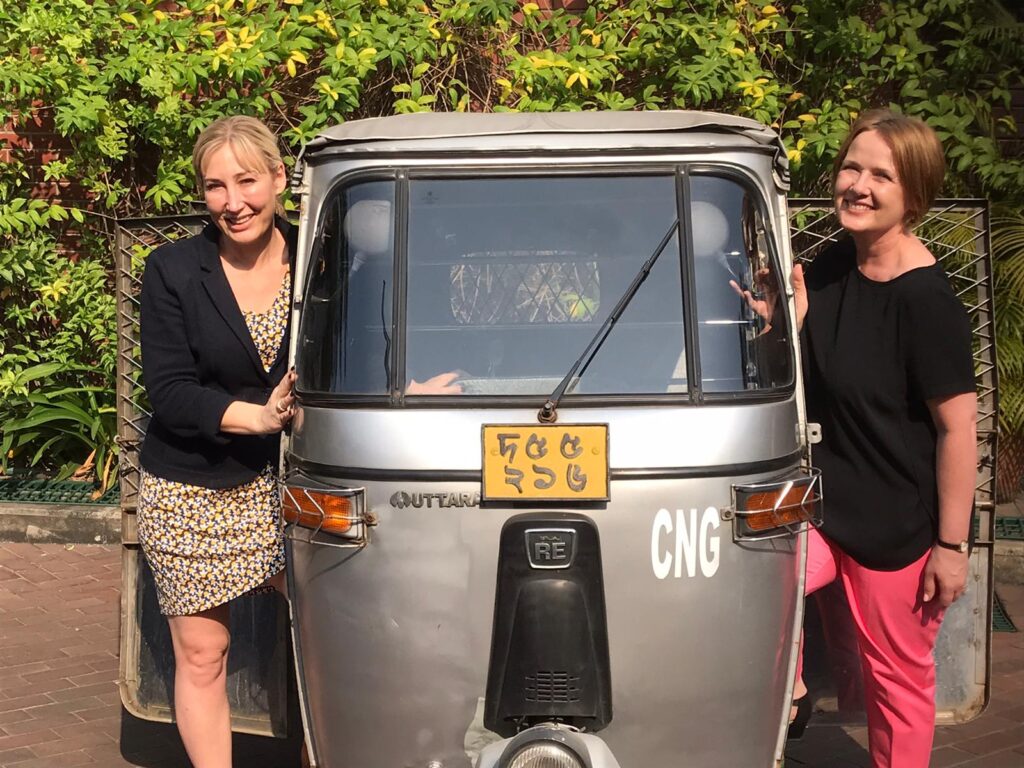
Well, I say, if you can’t beat ’em, join ’em – starting with a shameless list of all the countries we’ve visited in 2019: China, India, Nepal, Jamaica, Estonia, Sri Lanka, Mauritius, Rwanda and finally Bangladesh. Yes, it’s been tough. But when a real crisis hits a country where we’ve held an exercise, and we see all the preparatory work bearing fruit, it really brings it home how important our work is, and why it matters.

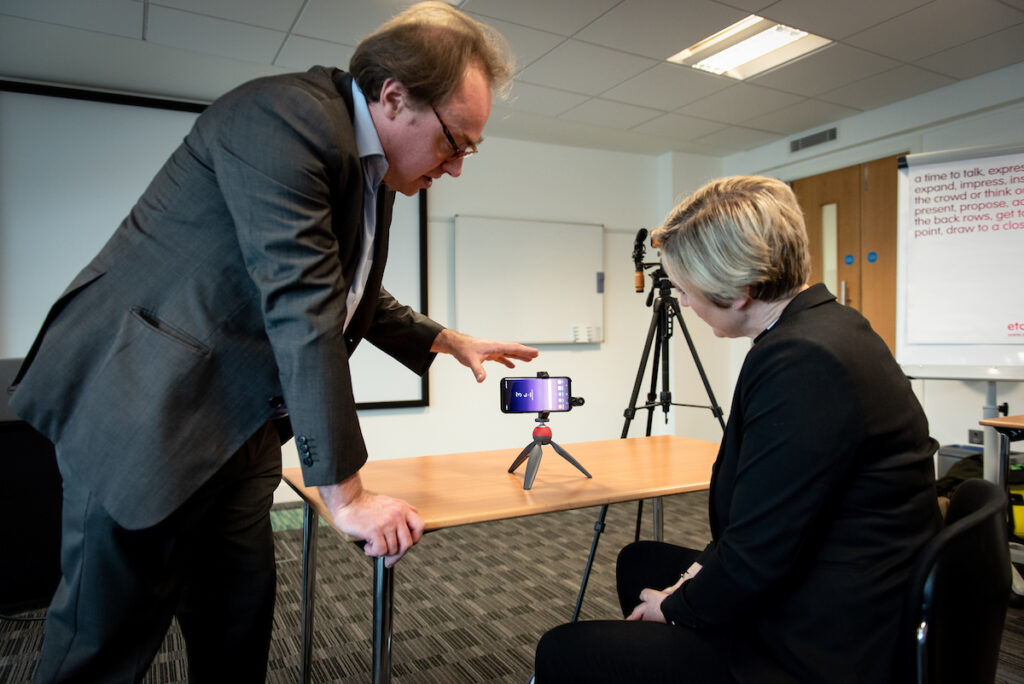
But it’s not all been about jetting off to foreign locations. Here in the UK we launched a new course this year, coaching delegates to film and edit effective short films on their smart phones. They say (not sure who ‘they’ are, but they certainly have a lot of opinions) that the best camera is the one you have with you and, with a few neat tricks, it’s possible to create something really special, quickly and cheaply. We’ve been getting some great feedback from delegates about how hands-on and practical the training is, and we’re planning on rolling out our advanced course early in 2020. Follow us on Twitter for updates.

A personal highlight for me in 2019 was being invited to speak at the Stagecoach women’s network dinner. Aside from some eye-opening stories about working in a male-dominated industry in the 1970s, it was heartening to see how a traditionally masculine industry is changing and adapting as more women make it to the senior ranks. There was a lot of discussion about presenting yourself with confidence – even when you don’t feel it.

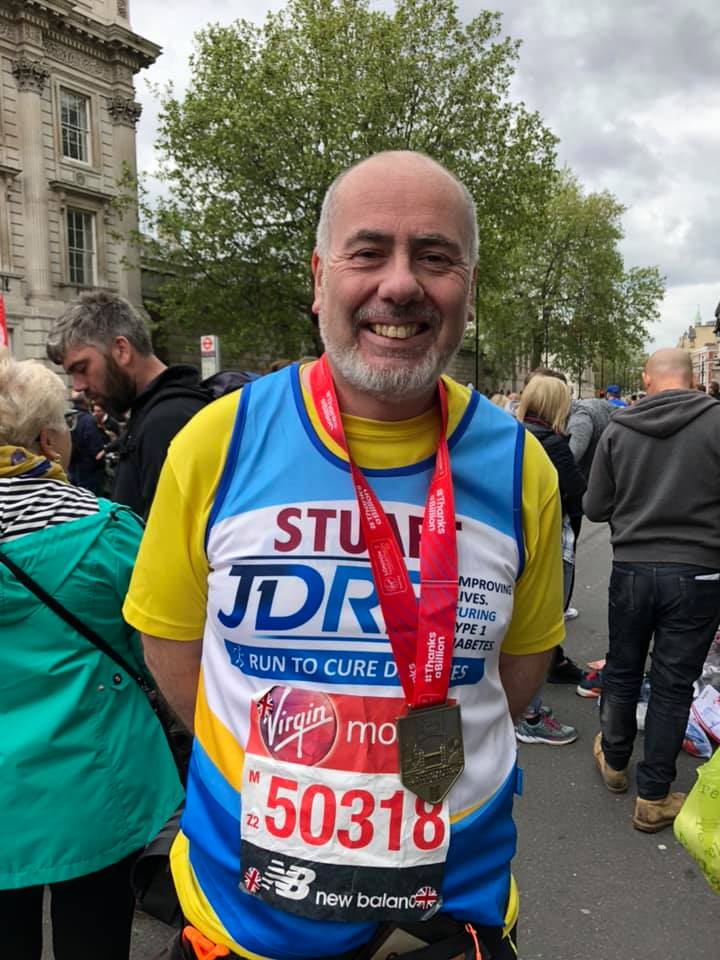
Another highlight that meant a lot to us was announcing our partnership with JDRF – a charity which funds research into type 1 diabetes, hoping to one day eradicate the condition for good. We’re providing training and coaching to help the organisation spread the word about the great work they do, and you can read about why it means so much to us in this recent blog post by our associate Stuart Baird, whose son suffers from the condition.

So having bragged about our travels, our achievements and our good deeds for 2019, all there is left to do is to wish our amazing team and all our lovely and much-valued clients a very merry Christmas and all the best for the year ahead.